Opus 4.6 now defaults to 1M context
Opus 4.6 now defaults to 1M context on Max, Team, and Enterprise plans, MCP servers can prompt you for input mid-task, and /context flags what's eating your token budget. Meanwhile, Wired profiles OpenAI's race to catch Claude Code, Microsoft taps Anthropic for Copilot Cowork, and Anthropic launches a dedicated code review tool.

Inside OpenAI's Race to Catch Up to Claude Code — Wired
Highlight
Opus 4.6 now defaults to 1M context on Max, Team, and Enterprise
If you're on a Max, Team, or Enterprise plan, your Opus 4.6 sessions now use the full 1M token context window by default -- no extra usage tier required. This means you can work with larger codebases and longer conversations before hitting compaction. The change coincides with Anthropic's broader 1M context GA announcement, which also removes the long-context pricing premium for both Opus 4.6 and Sonnet 4.6.
Worth Knowing
MCP servers can now request input from you mid-task
MCP servers can now pause execution and prompt you for structured input -- a form with fields, or a browser URL for OAuth flows -- via an interactive dialog. If you build or use custom MCP integrations, this opens up multi-step workflows that previously required workarounds. New Elicitation and ElicitationResult hooks let you intercept and override responses programmatically.
The /context command now suggests how to free up token space
Running /context now analyzes your session and flags specific issues -- bloated memory files, context-heavy tools, capacity warnings -- with actionable optimization tips. If you've been manually guessing why compaction kicks in early, this gives you concrete next steps.
You can now start a plan with a description in one step
Running /plan fix the auth bug now enters plan mode and immediately begins working on your description, saving you the extra prompt. A new /effort slash command also lets you adjust model effort level without leaving your session.
Worktree mode now supports sparse checkout for large monorepos
If you use --worktree in a large monorepo, the new worktree.sparsePaths setting lets you specify which directories to check out via git sparse-checkout. Startup is also faster -- worktree creation now reads git refs directly and skips redundant git fetch calls when the remote branch is already local.
New file-write shortcut in /copy and fewer bash permission prompts
Pressing w in /copy now writes your selection directly to a file, which is useful when clipboard access isn't available over SSH. Separately, lsof, pgrep, tput, ss, fd, and fdfind are now on the bash auto-approval allowlist, so you'll see fewer permission prompts for common read-only operations.
Under the Hood
Memory leak fix, token counting correction, and up to 12x SDK cost reduction
A memory leak in streaming API response buffers that caused unbounded RSS growth on the npm code path is fixed. Token estimation for thinking and tool_use blocks no longer over-counts, which was triggering premature compaction. SDK query() calls now maintain prompt cache correctly, reducing input token costs by up to 12x.
Fixes for CPU freezes on complex bash prompts and several session stability issues
Permission prompts for complex bash commands no longer trigger 100% CPU loops or freezes. Other stability fixes address a deadlock when many skill files change at once, plan mode requesting redundant re-approval, failed read operations incorrectly canceling sibling tool calls, and auto-compaction now stopping after 3 consecutive failures instead of retrying indefinitely.
From Anthropic
In the News


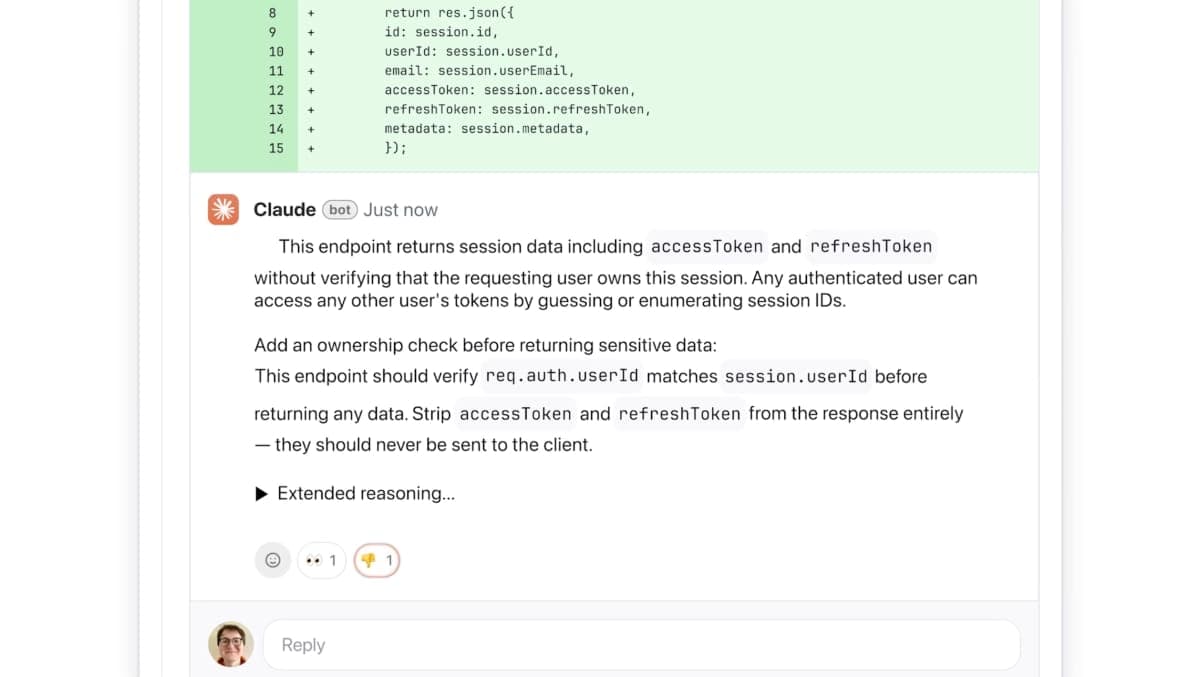
Between the 1M default context window, MCP elicitation, and the steady stream of stability fixes, this was a week that touched both the ceiling and the foundation of what you can do in a session. The /context diagnostics are worth trying if you've been bumping into compaction limits.